Remote teams pass around sensitive files constantly: contracts, onboarding PDFs, internal screenshots, export archives, financial reports, campaign assets. The problem is that collaboration tools make sharing easy, but they dont always make protection automatic.
Thats why many distributed teams now choose to encrypt files online before sending them through email, cloud storage, or messaging platforms. It adds a layer of control without forcing everyone to install enterprise desktop software just to lock a document.
If your workflow already includes preparing documents for delivery, it also helps to combine related documents before protecting them so recipients only manage one encrypted file instead of five scattered attachments.
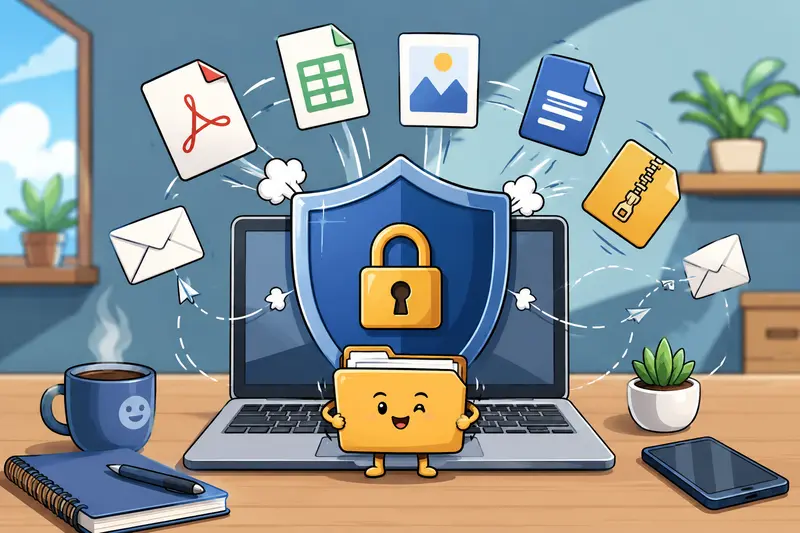
What Matters Most Here
For most remote teams, file encryption is less about military-grade complexity and more about reducing accidental exposure.
You usually want:
- password-protected files that travel safely through email or chat
- fast processing without software installs
- temporary handling instead of permanent storage
- support for PDFs, images, archives, and mixed file types
- predictable costs for recurring workflows
A browser-based workflow can handle all of that surprisingly well, especially when teams work across multiple operating systems.
Why Browser-Based Encryption Fits Distributed Work
Desktop-only encryption tools can become a maintenance issue in remote environments. Someone has an outdated version. Someone else cant run the software on a locked-down company laptop. Another teammate is on Linux while the rest use Windows.
Using Filemazing Encrypt File Tool https://filemazing.com/encrypt-file removes much of that friction because the workflow happens directly in the browser.
The platform focuses heavily on lightweight processing rather than acting as long-term storage. Uploaded files are treated as temporary processing jobs and cleaned on a short retention cycle after completion, which is important when handling contracts, HR files, or client deliverables.
Theres also a practical operational advantage for distributed teams: larger encryption jobs are queued and processed independently, so the interface doesnt freeze while someone uploads a bulky archive from hotel Wi-Fi five minutes before a deadline.
Getting It Done Without Extra Software
The workflow itself is fairly straightforward, but there are a few decisions that affect results.
Upload the files you actually need to protect
You can import files locally, from cloud storage providers like Google Drive or Dropbox, or from direct URLs.
For teams handling large design exports or scanned PDFs, reducing unnecessary size first often speeds up delivery afterward. If bandwidth matters, especially for international contractors, it helps to shrink files before secure sharing.
Choose a password strategy carefully
This sounds obvious until teams start sharing passwords in the same Slack thread as the encrypted file.
A better approach:
- send the encrypted file through one channel
- share the password through another
- avoid predictable passwords tied to project names
Encrypt and export
Once processed, the encrypted version becomes available for download. Because Filemazing uses token-based pricing, workloads stay fairly predictable instead of surprising teams with subscription tiers they barely use.
For example, the encrypt-file workflow currently uses a lightweight formula with:
- base token cost
- file size consideration
- per-file calculation
- min/max guards
That makes occasional use practical for smaller teams while still scaling to heavier workloads.
Share the protected version
At this stage, the file can be distributed through email, shared drives, ticket systems, or client portals with much lower exposure risk.
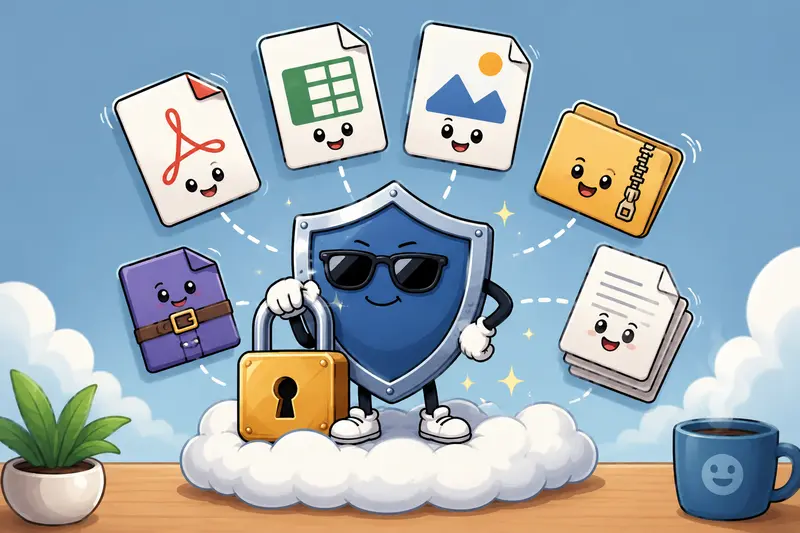
A Real Test With Mixed Remote-Team Documents
To see how this type of workflow behaves outside marketing copy, we tested several common distributed-team scenarios:
| File Type | Size | Notes |
|---|---|---|
| Scanned PDF contract | 48 MB | 132 pages |
| Product screenshots | 320 MB total | PNG exports |
| Internal ZIP archive | 780 MB | Mixed assets |
| HR onboarding pack | 22 MB | PDFs + forms |
A few things stood out during testing:
- The browser session remained responsive during larger uploads because jobs were queued rather than processed directly in the active interface.
- PDF encryption completed noticeably faster than the large archive workflow.
- Image-heavy documents benefited from pre-compression before encryption.
- Password-protected exports preserved original readability without introducing visible degradation.
One practical takeaway: encrypting extremely large image sets without compression first can waste time for both upload and download. Nobody notices bloated file size until the transfer stalls at 97%.
Another useful trick is cleaning metadata before encryption. Encryption protects file access, but metadata can still expose information like author names, software versions, GPS data, or editing history. For sensitive client work, its smart to remove hidden metadata before encryption.
Where Teams Usually Run Into Trouble
Encryption itself is rarely the hard part.
The messy part is workflow consistency.
Distributed teams often run into issues like:
- sending outdated encrypted versions
- forgetting which password belongs to which export
- encrypting files individually instead of packaging them logically
- protecting oversized files that should have been compressed first
Theres also a tradeoff between convenience and operational control.
For example:
- encrypting everything manually gives teams flexibility but increases human error
- automating encryption through API workflows improves consistency but requires setup discipline
Filemazing supports both approaches, which is useful if a company starts manually and later moves toward automation pipelines.
Practical Scenarios for Remote Teams
Different departments tend to use encryption differently.
Marketing Teams
Campaign previews, unreleased graphics, and client review decks often move through email chains quickly. Encrypting exports before delivery reduces accidental forwarding exposure.
Developers
Teams sharing configuration exports, build archives, or staging backups can automate protection through API-based workflows instead of relying on local desktop utilities.
Operations and HR
Onboarding documents, payroll records, and contractor agreements benefit from password protection even when shared internally.
Client-Facing Agencies
Encrypted PDFs add professionalism when sending proposals, invoices, or legal paperwork to external stakeholders.
Distributed Finance Teams
Monthly reporting packages frequently contain spreadsheets, scans, and signed approvals bundled together for regional offices.
Freelance Collaborators
External contributors can safely exchange deliverables without needing access to a company VPN or internal file system.
What Actually Makes This Useful
A lot of online encryption tools technically work. The difference usually comes down to operational friction.
A few areas where this approach helps:
- no dependency on desktop software installation
- predictable token pricing instead of oversized subscriptions
- support for multiple file types in one ecosystem
- cloud import support for remote collaboration
- temporary processing rather than persistent storage behavior
- scalable workflows for both manual users and API automation
The browser-based approach also reduces platform compatibility headaches. That matters more than people expect when teams span Windows laptops, MacBooks, managed corporate devices, and occasional Linux systems.
One Tradeoff Worth Understanding
Online encryption tools are excellent for workflow convenience, but they still depend on upload speed.
For very large archives, local desktop encryption may sometimes finish faster if:
- internet bandwidth is limited
- files exceed several gigabytes
- teams work offline regularly
On the other hand, browser-based workflows win heavily in accessibility and cross-device consistency.
For most remote organizations, convenience and operational simplicity outweigh the occasional large-upload bottleneck.
Common Questions
Can I encrypt files for email attachments?
Yes. This is one of the most common use cases. Encrypting files before attaching them to email adds protection if the message is forwarded accidentally or intercepted.
Does encryption reduce PDF quality?
No, encryption itself does not compress or degrade document quality. However, if you compress files before encryption, there may be tradeoffs depending on image settings and export choices.
Is browser-based encryption safe for sensitive documents?
The important factor is how files are handled operationally. Filemazing treats uploaded files as temporary processing artifacts rather than long-term storage, with cleanup occurring after processing completes.
What file types can be protected?
Teams commonly encrypt PDFs, images, ZIP archives, spreadsheets, reports, and mixed project exports.
Is this practical for recurring team workflows?
Yes, especially because the platform supports both manual browser usage and API automation. Smaller teams can start with occasional manual processing and expand later if workload volume increases.
Should files be compressed before encryption?
Often, yes. Large images and scanned PDFs can become difficult to transfer remotely. Compressing first may significantly reduce upload and delivery time while keeping documents readable.
Final Thoughts
Remote collaboration moves fast, and sensitive files rarely stay in one place for long. Contracts get forwarded. Screenshots end up in chats. Archives bounce between cloud drives and inboxes.
Using a lightweight way to encrypt files online helps reduce risk without slowing teams down with heavyweight desktop tooling.
Filemazing https://filemazing.com/encrypt-file works particularly well for distributed environments because it combines browser-based convenience, temporary processing behavior, predictable token pricing, and support for both manual and automated workflows.
For teams that regularly handle documents across regions, devices, and contractors, that balance tends to matter more than flashy enterprise features nobody actually uses.