Developers often need to convert audio files as part of larger workflows: preparing podcast assets, standardizing recordings for machine learning datasets, optimizing media uploads, or transforming files for cross-platform compatibility. The challenge is rarely the conversion itselfits fitting audio processing into an already busy schedule without adding more software, maintenance, or complexity.
When audio arrives packaged with other assets, it can help to first use an archive extraction tool to unpack ZIP or RAR files before processing the audio content.
What You Need to Know
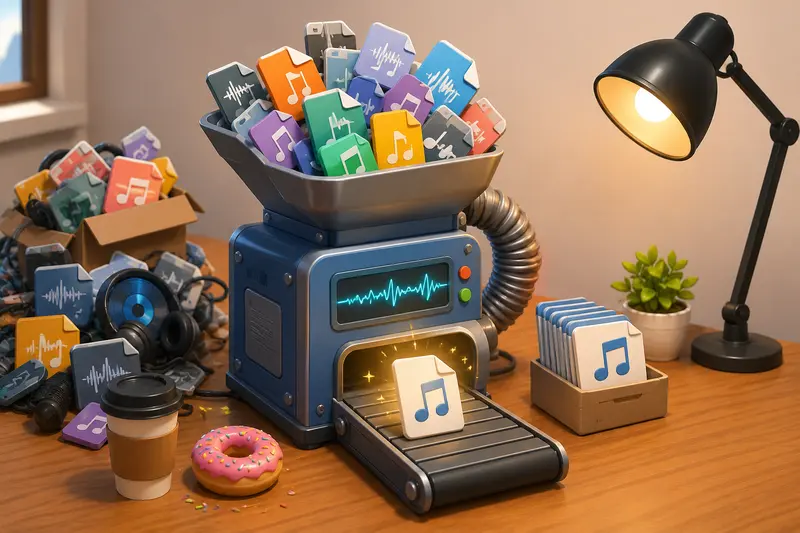
If your goal is to convert audio files efficiently while maintaining quality, a browser-based solution can eliminate installation overhead and simplify repetitive tasks. Modern tools can handle multiple formats, batch workloads, and automation requirements while keeping processing predictable.
Why Developers Care About Audio Conversion
Audio conversion appears in more development workflows than many people expect:
- Preparing audio for mobile applications
- Standardizing media libraries
- Creating optimized uploads for SaaS platforms
- Converting recordings for speech-to-text pipelines
- Managing podcast production assets
- Delivering consistent formats across operating systems
A reliable conversion process reduces compatibility issues and prevents unnecessary debugging later in the project lifecycle.
How the Process Works
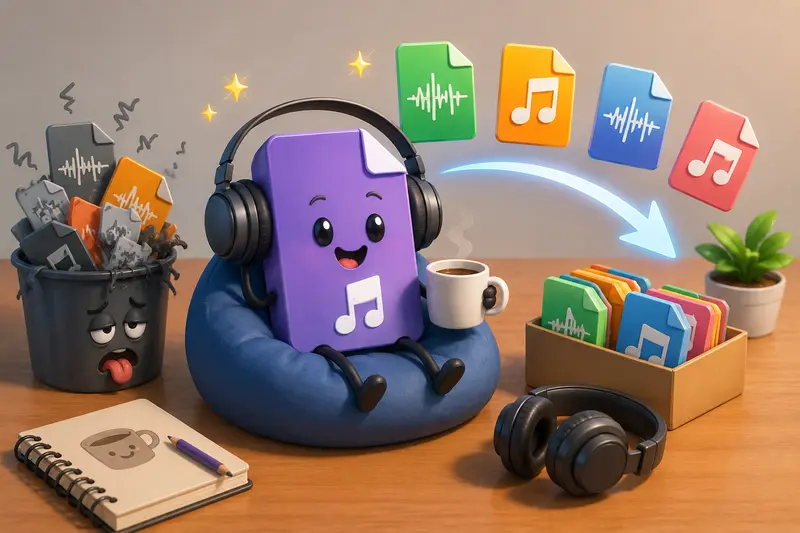
A practical audio conversion workflow typically looks like this:
1. Import Source Files
Upload audio from local storage, cloud services, or a URL source.
2. Select the Output Format
Choose the format that best matches your target platform or application requirements.
3. Configure Quality Settings
Adjust bitrate or quality parameters depending on your intended use.
4. Process the Conversion
The conversion job runs independently, allowing you to continue other work.
5. Download and Integrate
Retrieve the converted files and add them directly to your deployment, media pipeline, or project assets.
A Practical Tool for High-Quality Audio Conversion
For developers looking for high quality audio conversion without managing desktop software, Filemazing provides a browser-based audio conversion service:
https://filemazing.com/audio-converter
The platform emphasizes output quality while supporting a clean browser workflow. Instead of installing and updating dedicated conversion utilities, users can process files directly online and integrate the service into automated workflows through API endpoints.
Notable capabilities include:
- Multiple audio format support
- Browser-based processing
- Batch-friendly workflows
- API-ready automation
- Transparent token pricing
- Local, cloud, and URL-based inputs
- Job queue handling for larger workloads
For teams managing media alongside other assets, Filemazing also offers a dedicated format conversion tool for handling related image and file transformations within the same workflow.
Tested Insight: A Real-World Scenario
During a realistic media preparation workflow, a development team received:
- 42 audio recordings
- 18 scanned PDF documents
- 65 image assets
- One ZIP archive containing supplemental recordings
The archive was unpacked first, then the audio recordings were converted into a standardized format for application deployment.
The combined upload exceeded several hundred megabytes. Because processing was queued rather than performed directly in the browser session, the interface remained responsive while jobs completed in the background.
Observed Result
- Consistent output formatting across all recordings
- Predictable processing costs
- No need to install conversion utilities
- Faster preparation of deployment-ready assets
Practical Takeaway
A useful but often overlooked optimization is converting all source recordings to a single internal format early in the workflow. This reduces repeated conversions later and minimizes compatibility surprises during testing.
Format Selection Guidance for Better Results
Choosing the right output format matters as much as the conversion itself.
MP3
Best for:
- General distribution
- Podcasts
- Web uploads
Advantages:
- Broad compatibility
- Smaller file sizes
Tradeoff:
- Lossy compression can reduce audio fidelity.
WAV
Best for:
- Editing
- Master recordings
- Archival workflows
Advantages:
- Excellent audio quality
Tradeoff:
- Much larger file sizes.
AAC
Best for:
- Mobile applications
- Streaming environments
Advantages:
- Efficient compression
- Good quality-to-size ratio
Tradeoff:
- Slightly less universal than MP3 in older systems.
FLAC
Best for:
- Preservation
- High-fidelity libraries
Advantages:
- Lossless compression
Tradeoff:
- Larger files than MP3 or AAC.
Understanding these tradeoffs helps developers balance storage costs, transfer speeds, and listening quality.
Where Developers Commonly Use Audio Conversion
API and SaaS Platforms
Standardizing user-uploaded media before processing.
Mobile App Development
Preparing files for Android and iOS compatibility.
Podcast Production Pipelines
Converting raw recordings into distribution-ready formats.
Machine Learning Projects
Normalizing training datasets across thousands of recordings.
Internal Knowledge Libraries
Maintaining consistent formats for searchable media archives.
Customer Support Systems
Preparing call recordings for analysis and storage.
What Makes This Approach Useful
Rather than maintaining specialized software on every workstation, developers can centralize processing through a browser-based service.
Key advantages include:
- Reduced setup and maintenance effort
- Consistent conversion behavior
- Batch-friendly processing
- Flexible automation opportunities
- Transparent workload pricing
- Accessibility across operating systems
Another benefit is predictable scaling. Small workloads can use daily free tokens, while larger projects can move to higher-capacity token packs as needed.
Privacy and Handling Considerations
Audio files often contain sensitive information, including interviews, meetings, customer conversations, or internal recordings.
Filemazing treats uploads as temporary processing artifacts rather than permanent storage. Completed jobs are cleaned on a short retention schedule, helping reduce long-term exposure of uploaded content.
For teams distributing sensitive recordings after conversion, it may be useful to password-protect converted audio files before sharing them externally.
Things Users Often Ask
What is the best audio converter for developers?
The best audio converter depends on your workflow requirements. Developers typically prioritize automation support, output consistency, format coverage, and predictable processing behavior.
Can I convert audio online free?
Many platforms offer limited free usage. Filemazing provides daily free tokens that allow users to process workloads before purchasing additional capacity.
Does audio conversion reduce quality?
It can. Lossy formats such as MP3 generally reduce file size at the expense of some audio detail, while lossless formats like FLAC preserve original quality.
Which format should I choose for application deployment?
MP3 and AAC are common choices for production environments due to their balance of compatibility and file size efficiency.
Can large files be processed?
Yes. Queue-based processing is particularly useful for larger uploads because tasks continue without blocking the user interface.
Is browser-based conversion secure?
Security depends on the providers implementation. Temporary processing, limited retention periods, and cleanup mechanisms contribute to stronger privacy practices.
Final Recommendation
If you regularly need to convert audio files as part of development, deployment, content production, or automation workflows, a browser-based solution can significantly reduce operational overhead. Filemazing combines high quality audio conversion, multiple format support, API readiness, transparent token pricing, and privacy-focused processing into a workflow that fits naturally into modern development environments.
For busy developers who want reliable results without managing additional desktop tools, its a practical way to keep media processing efficient and predictable.