Sending presentation files should not feel like handing over your entire working folder and hoping nothing leaks. Yet that is often what happens: a deck gets exported, supporting PDFs are attached, a few images are included, and the whole package goes out through email, Slack, or a client portal with very little protection.
If you need to encrypt documents before sending, especially for developer handoffs, investor decks, internal demos, or client presentations, the goal is not only to add a password. The better goal is to build a private file sharing workflow that keeps files organized, limits unnecessary exposure, and avoids last-minute formatting chaos.
The Core Idea
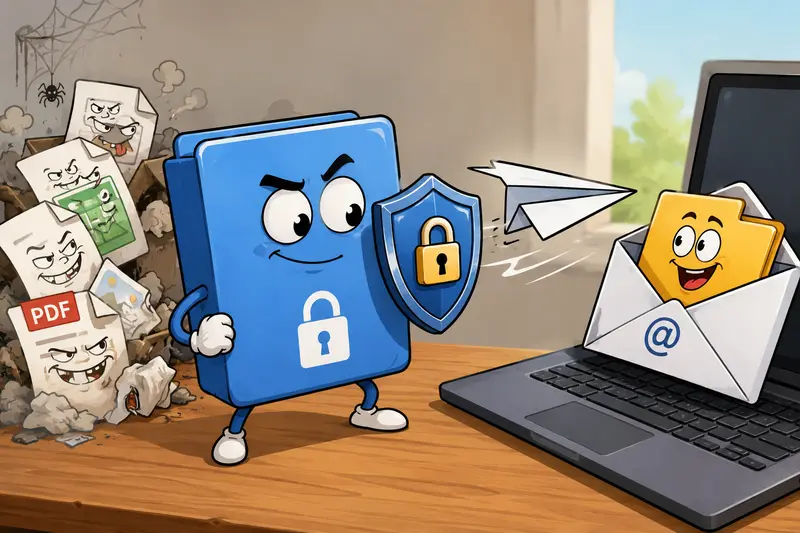
Encrypting files before sending means applying password-based protection or file encryption before the document leaves your control.
For presentations, that usually applies to:
- PDF exports of slide decks
- proposal documents
- screenshots and image assets
- zipped supporting files
- client-facing technical documentation
- confidential roadmap or architecture material
A browser-based workflow such as Filemazings encrypt file tool can help when you need to prepare files without installing desktop software. Filemazing is built for practical file processing tasks like conversion, compression, metadata cleanup, PDF merging, archive extraction, and encryption, with both web-based usage and API-ready automation for developers.
Why Presentation Files Need More Than Attach and Send
Presentation files often contain more than visible slides.
A PDF deck might include speaker notes, embedded images, hidden metadata, old export names, or customer references buried in file properties. Images can carry device metadata. Supporting files may include draft assets that were never meant to be shared.
Before encryption, it is worth checking whether the file itself is clean. For example, if your deck includes exported screenshots or PDFs from multiple sources, you may want to remove hidden metadata before encryption so the protected file does not preserve unnecessary background information.
Encryption protects access. Cleanup reduces what is inside the file in the first place.
Both matter.
A Practical Workflow Developers Can Reuse
A good private file sharing workflow does not need to be complicated. It should be repeatable enough that you can use it before every product demo, sprint review, stakeholder presentation, or client delivery.
Here is a dependable flow:
Prepare the final export
Export the presentation to PDF when possible. PDFs are easier to lock down, review, and send consistently than editable slide files.
Combine related files when needed
If you have multiple PDFs, such as a proposal, technical appendix, and implementation timeline, combine them first using a tool to merge PDF files into one package. This reduces attachment clutter and makes password sharing easier.
Remove unnecessary metadata
Strip hidden metadata before encryption if files came from design tools, scanners, shared folders, or internal systems.
Encrypt the final document
Use a strong password and avoid reusing passwords from other client or internal projects.
Send the password separately
Do not include the password in the same email as the encrypted file. Send it through a separate channel, such as a secure chat, password manager share, or phone call.
This is especially useful when you need to encrypt files for email but still keep the process fast enough for real delivery schedules.
Tested Scenario: Presentation Pack Before Client Delivery
A realistic test workflow used a 42-page PDF presentation exported from slides, two supporting PDF documents, and four PNG diagrams. The total working set was about 38 MB before cleanup.
The workflow looked like this:
- combine the two supporting PDFs with the main deck
- review whether the PNG diagrams needed to remain separate
- remove metadata from the final PDF
- encrypt the finished document
- download the protected output
- send the password through a separate message
The useful observation was that merging first made the encryption step cleaner. Instead of managing three protected files and three passwords, the final delivery became one encrypted PDF package. That reduced confusion for the recipient and made version control easier.
The tradeoff is review time. Batch processing is faster, but sensitive presentation material still benefits from manual review before sending. Automation can prepare files; it should not replace checking whether the final deck contains the right content.
Where Filemazing Fits Into This Workflow
Filemazing is a lightweight browser-based file processing SaaS for teams that need repeatable document and media workflows. For encryption, the encrypt file workflow is useful when you want to password protect PDFs and images without switching between desktop apps.
For developers, the API angle matters. Manual uploads are fine for occasional presentation prep, but recurring workflows can be automated around file processing jobs, status tracking, and completed downloads.
Filemazing also uses transparent token-based pricing instead of a flat subscription model. The encrypt-file operation currently uses a pricing rule of base 4, per MB 1.0, per page 0.0, and per file 2.0. That makes costs easier to estimate before processing, especially compared with tools that hide limits behind vague usage tiers.
Anonymous and registered users can start with daily free tokens, and larger workloads can be handled through token packs such as Pack 500, Pack 5000, and Pack 50000.
Developer-Focused Use Cases
For developers, encryption before sending is not limited to legal documents or finance files. It shows up in everyday delivery work.
Common examples include:
- sending architecture diagrams before a stakeholder review
- sharing API documentation with a client before launch
- protecting investor presentation PDFs with technical roadmap details
- sending sprint demo materials to external vendors
- packaging QA reports and screenshots for a security review
- distributing internal enablement decks across remote teams
If files arrive as compressed folders, unpack and inspect them before applying protection. A tool like archive extraction before encryption can help you see what is actually inside before you protect and forward the package.
A Non-Obvious Tip: Encrypt the Stable Format, Not the Working Format
When possible, encrypt the final exported PDF rather than the editable presentation file.
Editable formats can contain revision history, hidden layouts, unused assets, comments, or plugin-specific data. A PDF export is usually more stable and predictable for recipients.
There are exceptions. If the recipient must edit the presentation, you may need to protect the editable file itself. But for most presentation delivery workflows, a clean PDF is the safer default.
Tradeoffs to Keep in Mind
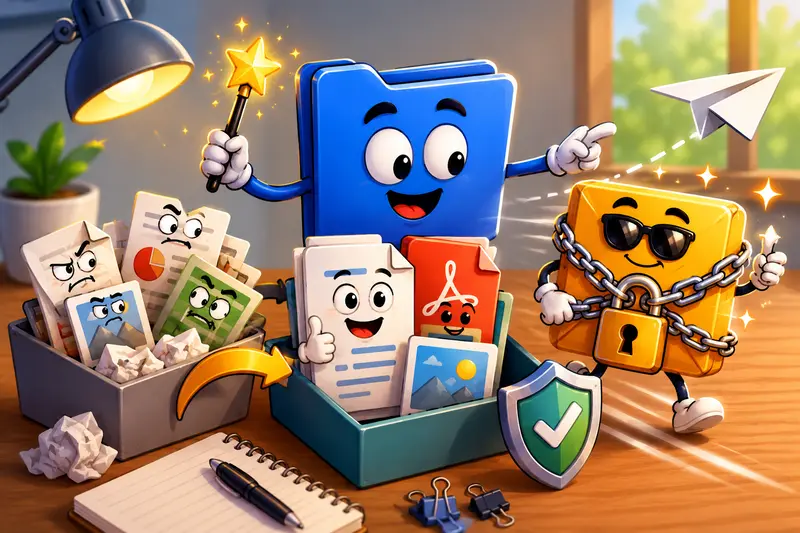
Encryption improves privacy, but it does not magically fix every file-sharing problem.
A few practical tradeoffs matter:
- Compression vs quality: Reducing file size before sending can help, but over-compressed images may look poor in a presentation.
- Batch processing vs manual review: Batch workflows save time, but confidential decks deserve a final human check.
- PDF vs images: PDFs are easier to distribute as complete documents, while images are useful for specific slides, diagrams, or previews.
- Email convenience vs security: Email is familiar, but passwords should travel separately.
The goal is not maximum complexity. The goal is controlled sharing.
Privacy and File Handling
For sensitive presentation material, file handling matters as much as encryption.
Filemazing treats uploaded files as temporary processing artifacts rather than long-term storage. Files are processed through queued jobs, completion status can be tracked, and finished outputs are delivered for download. The platform is designed around short retention and cleanup behavior, which is important when documents contain client names, roadmap details, pricing, or unpublished technical plans.
That does not remove the need for good password practices, but it does reduce the risk of files sitting around indefinitely after processing.
FAQ
Can I encrypt documents before sending them through email?
Yes. Encrypt the document first, download the protected version, attach that file to the email, and send the password through a different channel.
Can I password protect PDFs and images?
Yes, depending on the file format and workflow. PDFs are usually the most practical format for password-protected presentation delivery. Images may be protected individually or placed into a protected package.
Should I clean metadata before encryption?
Usually, yes. Encryption controls access, but metadata cleanup helps reduce hidden information inside the file before it is protected.
Is this suitable for automated developer workflows?
Yes. Filemazing supports browser-based workflows and API endpoints, so teams can build repeatable processing pipelines for encryption, conversion, cleanup, and delivery.
What happens with larger presentation files?
Larger files may take longer to process and consume more tokens based on file size and workload characteristics. Queued processing helps prevent big jobs from blocking the browser session.
Should I send the password in the same email?
No. Send the encrypted file and the password separately. Otherwise, anyone with access to the email has both pieces.
Final Recommendation
Encrypting presentation documents before sending is a small workflow change that can prevent major privacy mistakes.
For developers and SaaS teams, the best approach is to prepare the final files, remove unnecessary metadata, combine related documents when useful, encrypt the finished package, and share the password separately.
Filemazing fits well when you want that workflow in the browser, with predictable token usage, temporary file handling, and API-friendly processing for repeatable delivery pipelines.