Audio files have a habit of becoming inconvenient at the worst possible moment. A client asks for a cleaner recording, a supplier needs a format compatible with older software, or a team member cant open the attachment you just sent five minutes before a meeting.
Thats where an efficient MP3 to WAV converter becomes genuinely useful for small business owners handling presentations, training clips, voice memos, product demos, or podcast snippets.
WAV files are larger, but they preserve more audio detail and work reliably across editing tools, archival systems, and professional playback environments. If you regularly send audio files through email or collaborate with freelancers, vendors, or remote teams, converting MP3 files properly can save time and prevent compatibility issues later.
For businesses already managing documents and media in the same workflow, tools like Filemazing Format Converter https://filemazing.com/format-converter can also help standardize related file assets before distribution.
The Short Version
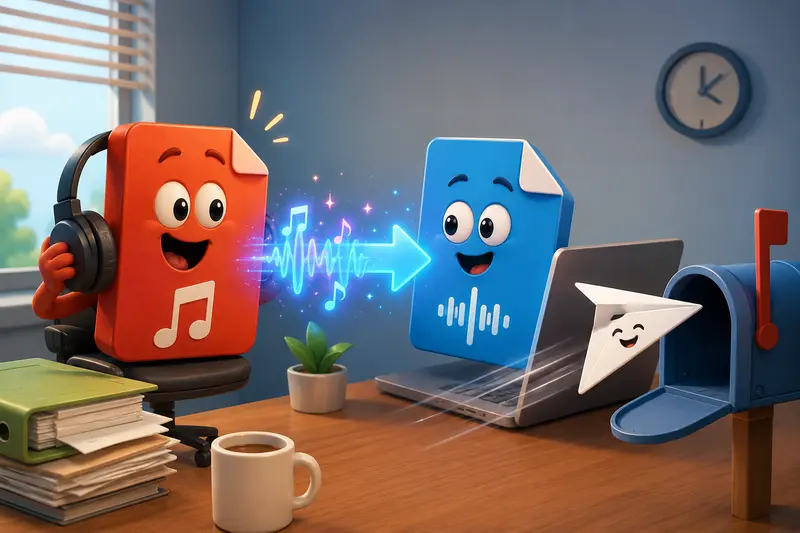
If your goal is reliable email sharing and better compatibility, converting MP3 files into WAV format is often the safer choice for professional workflows.
An online converter helps when you need to:
- preserve audio quality for editing
- avoid playback issues across devices
- prepare files for transcription or archiving
- standardize recordings for teams
- convert audio for mobile and desktop compatibility
A browser-based solution like Filemazing Audio Converter https://filemazing.com/audio-converter keeps the process lightweight without requiring desktop software installs or complex setup.
Why Small Businesses Still Use WAV Files
MP3 remains excellent for casual listening because it compresses audio aggressively. The tradeoff is that some sound information gets discarded to reduce file size.
WAV works differently.
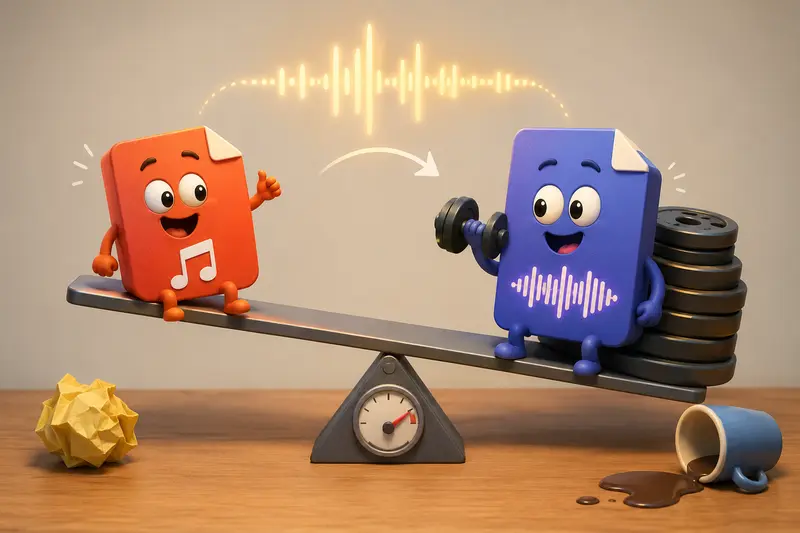
It stores audio in an uncompressed format, which makes it larger but more accurate. That matters when:
- editing spoken-word recordings
- preparing audio for marketing videos
- cleaning up interviews
- sending source files to contractors
- preserving original sound quality for reuse
A 6-minute MP3 voice recording might only be 57MB, while the same WAV export could exceed 50MB depending on settings. Larger? Absolutely. But cleaner for production work.
In practical business workflows, the extra fidelity can prevent repeated exports and quality degradation later.
How the Conversion Process Usually Works
The workflow itself is straightforward, but choosing the right settings matters more than many people realize.
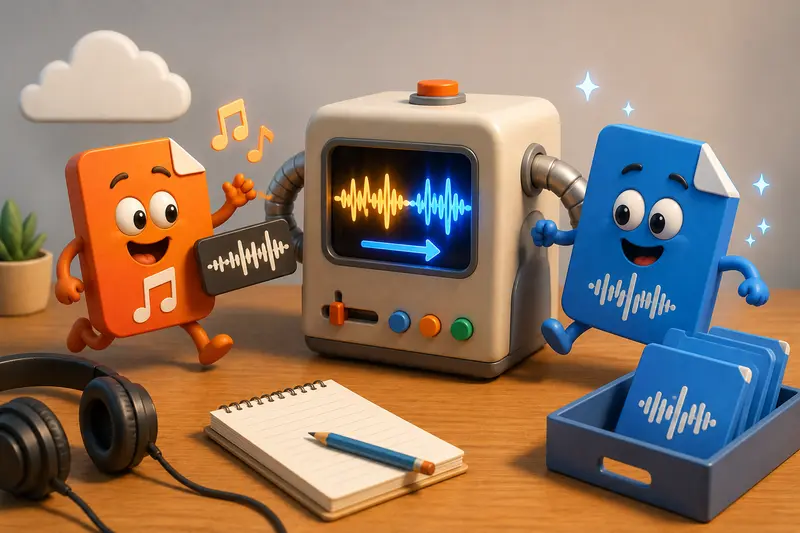
Typical conversion flow
- Upload the MP3 recording from your device, cloud storage, or shared folder.
- Select WAV as the target format.
- Choose audio quality settings if available.
- Process the file.
- Download the converted WAV file and share or archive it.
Whats useful about browser-based tools is flexibility. A small business owner working from a Chromebook, tablet, or borrowed laptop can still process files without installing software that IT may immediately dislike.
Filemazing also supports cloud imports from services like Google Drive and Dropbox, which becomes surprisingly helpful when clients send oversized media files scattered across multiple platforms.
A Practical Test: What Happened With Real Business Audio
To see how realistic this workflow feels in daily operations, we tested several common business recordings:
| File Type | Original Format | Original Size | Converted WAV Size |
|---|---|---|---|
| Customer support call | MP3 | 8MB | 61MB |
| Product demo narration | MP3 | 14MB | 98MB |
| Webinar excerpt | MP3 | 21MB | 146MB |
The conversion itself was consistent and stable across files.
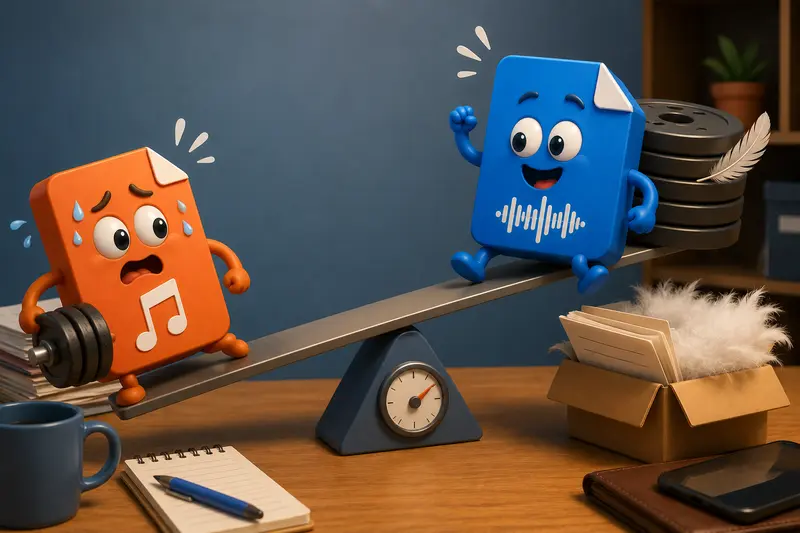
One thing became immediately obvious though: WAV quality improves editing flexibility, but email attachment limits become a real consideration afterward.
That creates an important workflow insight many teams overlook:
Convert to WAV for editing, mastering, or archival purposes but not necessarily for final email delivery.
In some cases, it makes sense to keep both versions:
- WAV for production storage
- MP3 for lightweight distribution
That hybrid approach reduces unnecessary storage overhead while preserving a clean source file.
Another useful detail: temporary processing and short retention cleanup policies matter more than people think when handling customer calls or internal recordings. Privacy-conscious processing is especially relevant for small businesses dealing with sensitive discussions or client data.
If your recordings include embedded metadata youd rather remove before sending externally, Filemazing Metadata Scrubber https://filemazing.com/metadata-scrubber can help clean media details before publishing or sharing.
The Hidden Tradeoff Most People Ignore
Heres the part many articles skip.
Converting MP3 to WAV does not magically restore lost quality.
Once audio has already been compressed into MP3, the removed sound information is gone permanently. WAV simply preserves whatever quality remains without adding additional compression.
That distinction matters.
If you receive a poorly encoded 64kbps MP3, converting it into WAV will create a much larger file but not a better sounding one.
For small business workflows, this means:
- use higher bitrate MP3s before conversion when possible
- avoid repeatedly converting formats back and forth
- archive important recordings in WAV after the first clean export
Some file formats cooperate nicely. Others behave like they woke up determined to sabotage deadlines.
Where This Helps in Everyday Business Operations
The use cases tend to be less glamorous than studio production but far more common.
Customer communication archives
Businesses storing support calls or consultation recordings often prefer WAV for long-term reference and transcription accuracy.
Marketing voiceovers
Freelancers editing promotional audio usually request WAV because it handles reprocessing better.
Internal training libraries
Teams building onboarding audio content benefit from maintaining higher-quality originals.
Legal or compliance documentation
Certain industries preserve uncompressed audio for clearer evidence retention.
Mobile editing workflows
Some mobile editing apps handle WAV imports more predictably than compressed formats when you need to convert audio for mobile production tasks.
Podcast collaboration
Guest interviews often arrive in inconsistent formats, making standardized conversion useful before editing begins.
Why Browser-Based Conversion Makes Sense for Smaller Teams
Desktop audio software is powerful, but many small businesses simply do not need a heavyweight editing suite for routine conversion work.
Browser-based processing changes the equation a bit:
- no installation overhead
- works across operating systems
- easier for non-technical staff
- useful for temporary workflows
- scalable for occasional bulk processing
Filemazing also uses transparent token pricing instead of locking users into subscriptions they may barely touch.
For example, audio conversion workloads calculate token usage based on factors like:
- base processing cost
- file size
- media duration
That predictability helps smaller teams estimate operational costs before processing larger batches.
And honestly, predictable pricing feels refreshing in a world where some SaaS tools bill like theyre negotiating ransom demands.
A Few Mistakes Worth Avoiding
Sending WAV files directly through email without checking limits
Many email providers cap attachments around 2025MB.
Large WAV exports can exceed that quickly.
Converting multiple times
Repeatedly switching between MP3 and WAV formats can create unnecessary workflow confusion and version management problems.
Ignoring metadata
Audio files sometimes contain creator information, timestamps, or embedded details that should not travel externally.
Using WAV for every scenario
WAV is excellent for quality preservation, but not ideal for every delivery context. MP3 still makes more sense for lightweight public sharing.
If you need to secure sensitive recordings before external delivery, Filemazing Encrypt File Tool https://filemazing.com/encrypt-file can add password protection before distribution.
What Makes an Audio Converter Worth Using?
Not every converter handles business workloads equally well.
The better tools typically focus on:
- stable processing for larger files
- predictable output quality
- broad format support
- temporary file handling
- cloud import flexibility
- transparent pricing
- queue-based processing for bigger tasks
For companies evaluating the best audio converter options, operational consistency matters more than flashy features.
Especially when five different people suddenly need the same webinar recording exported in different formats by the end of the afternoon.
Frequently Asked Questions
Is WAV always better than MP3?
Not necessarily. WAV preserves more audio detail, but the files are much larger. For editing and archival purposes, WAV is usually preferable. For lightweight sharing, MP3 often remains more practical.
Can I convert audio online free?
Many platforms offer limited free usage tiers or daily free processing allowances. Filemazing provides daily free tokens so users can test smaller workloads before purchasing larger token packs.
Will converting MP3 to WAV improve poor-quality audio?
No. WAV prevents additional compression loss, but it cannot restore sound data already removed from the original MP3 file.
Are browser-based converters safe for business files?
That depends on the providers handling practices. Services with temporary processing workflows and automatic cleanup policies are generally preferable for privacy-conscious businesses.
Whats the biggest issue with WAV files?
File size. High-quality WAV files become large quickly, especially for longer recordings.
Can I process related business files in the same workflow?
Yes. Many teams combine audio conversion with tasks like media cleanup or document standardization using tools such as Filemazing Format Converter https://filemazing.com/format-converter for broader file preparation workflows.
Final Thoughts
For small business owners, an effective MP3 to WAV converter is less about fancy production work and more about reliability.
When recordings need to be edited, archived, cleaned up, or shared across different systems, WAV remains one of the safest formats for preserving usable audio quality.
A browser-based platform like Filemazing Audio Converter https://filemazing.com/audio-converter keeps the process flexible without forcing teams into oversized software ecosystems or long-term subscriptions.
And when deadlines are tight, reducing friction in file handling can matter just as much as the conversion itself.