Designers rarely struggle with creativity. File sizes, on the other hand, have a talent for appearing at the worst possible moment.
A polished portfolio suddenly exceeds upload limits. Client previews take forever to load. Large JPG exports clog collaboration tools. And if you work with layered assets, mockups, or presentation-ready visuals every day, storage inflation becomes part of the routine.
Thats where the ability to compress images online without wrecking visual quality becomes genuinely useful.
Modern browser-based tools such as Filemazing Compress Image make it possible to reduce image weight quickly while keeping files suitable for design reviews, websites, social media, and client delivery workflows.

Why Designers Compress Images More Often Than They Admit
High-resolution visuals are great until they leave your workstation.
A 12 MB JPG exported from Photoshop may look flawless locally, but once that image enters a real-world workflow, problems start showing up:
- slow CMS uploads
- bloated landing pages
- sluggish email attachments
- oversized Figma exports
- delayed client approvals
- mobile loading issues
In practical design environments, file efficiency matters almost as much as aesthetics.
The challenge is finding image compression without losing quality in a way that doesnt feel destructive.
Some compression tools aggressively blur textures, flatten gradients, or create visible artifacts around typography. Designers notice those flaws immediately. Clients eventually do too.
Filemazing approaches this differently by focusing on browser-based processing with adjustable workload handling and predictable token usage instead of forcing oversized desktop software into the workflow.
The Short Version
If your goal is to:
- reduce upload times
- shrink JPG or PNG assets
- optimize batches of exported visuals
- preserve reasonable sharpness
- avoid installing compression software
then using a dedicated online compressor is often faster than reopening source files and re-exporting everything manually.
For teams already handling PDFs and media assets, it also helps that Filemazing includes related tools like metadata scrubbing for images, which can remove hidden camera or editing metadata before sharing deliverables externally.
A Real Workflow Test From a Design Sprint
Last month, we tested a realistic scenario involving a branding presentation package for a startup client.
The upload set included:
- 42 JPG mockups
- 11 PNG interface exports
- several presentation graphics
- combined size: roughly 680 MB
The objective wasnt maximum compression. It was balance.
After running the files through a batch image optimizer workflow, the total package size dropped by a little over 55% while keeping typography sharp enough for presentation decks and collaborative review tools.
The most noticeable improvements were:
- dramatically faster Slack uploads
- smoother cloud preview generation
- improved loading speed inside shared project folders
Interestingly, PNG files behaved differently than JPG exports. PNG compression preserved transparency well, but some image-heavy PNG assets remained relatively large compared to equivalent JPG versions.
That tradeoff matters more than many people realize.
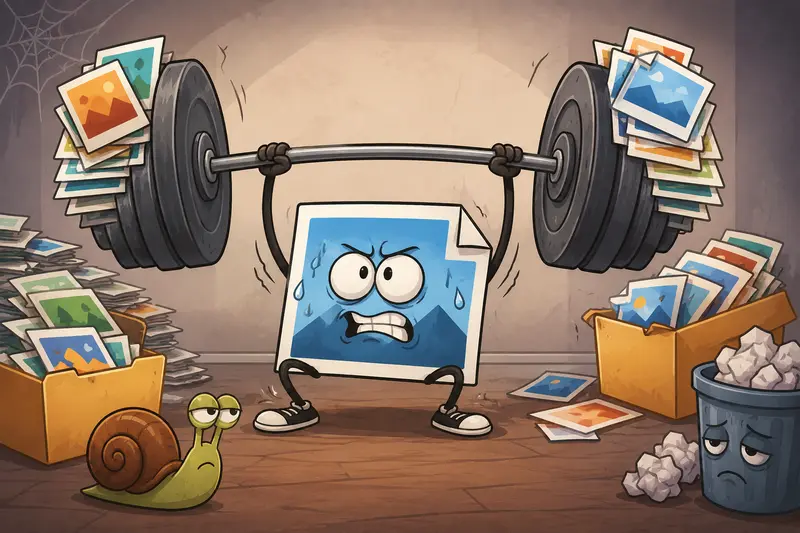
PNG vs JPG: Where Designers Usually Make the Wrong Choice
Not every image should be compressed the same way.
This is one of the most overlooked parts of modern asset optimization.
JPG works best for:
- photographs
- textured backgrounds
- marketing visuals
- lifestyle imagery
- presentation exports
PNG remains preferable for:
- transparent assets
- UI elements
- icons
- screenshots
- crisp typography overlays
Trying to aggressively compress PNG files can produce disappointing size reductions because PNG behaves differently from lossy formats like JPG.
Meanwhile, over-compressing JPGs often creates subtle gradient damage around shadows and skin tones.
A better approach is selective optimization rather than universal compression settings.
Thats especially important for designers managing mixed-format exports across campaigns.
How the Compression Process Actually Fits Into Design Work
Most designers dont want another complicated production step.
A practical workflow usually looks more like this:
- Export assets from your design software
- Upload individual files or batches
- Compress based on intended usage
- Review quality-critical visuals manually
- Deliver optimized assets to clients or production teams
For larger presentation workflows, some teams first convert presentations or PDFs into optimized visuals using tools like PDF to image conversion before compressing the resulting assets for web publishing.
That sequence often produces cleaner output than compressing embedded PDF graphics directly.
Where Browser-Based Compression Saves the Most Time
Theres a hidden productivity advantage to browser processing that designers tend to appreciate after a few projects.
No installation overhead.
No plugin conflicts.
No which version are we using? conversations.
Filemazing runs entirely through the browser while supporting local uploads, cloud imports, and queued processing for larger tasks. That matters when creative teams are juggling dozens of deliverables simultaneously.
And because uploaded files are treated as temporary processing artifacts rather than permanent storage, the workflow feels safer for sensitive client work.
Nobody wants confidential campaign assets lingering indefinitely on random servers.
One Tradeoff Worth Knowing Before You Compress Everything
Compression always involves compromise somewhere.
Usually the tradeoff is between:
- visual precision
- file size
- processing speed
If you push for extremely small files, subtle artifacts become more visible especially around:
- fine text
- gradients
- shadows
- layered interface components
For social uploads, that might be acceptable.
For print previews or premium portfolio pieces, maybe not.
A surprisingly effective strategy is using moderate compression first, then manually reviewing only the most visually sensitive assets instead of obsessively inspecting every file in a giant batch.
That saves an enormous amount of time during production crunches.

A Useful Tip Most Designers Skip
If youre preparing compressed assets for external sharing, compressing alone may not be enough.
Image files often retain hidden metadata:
- device information
- editing software details
- timestamps
- GPS data
- embedded author information
For agencies or freelancers working with confidential projects, running files through a metadata removal workflow before delivery adds an extra layer of privacy and professionalism.
Its one of those tiny workflow improvements that becomes surprisingly valuable once clients start requesting tighter security standards.
Bulk Processing Makes More Difference Than Expected
Compressing one image is easy.
Compressing 300 campaign assets before a launch deadline is where tooling quality suddenly matters a lot.
Filemazing supports larger queued jobs and transparent token-based processing instead of forcing subscription tiers that many smaller studios barely use consistently.
For designers handling fluctuating workloads, that model can be more practical:
- smaller projects stay inexpensive
- larger export days remain scalable
- API workflows stay available if automation becomes necessary later
That flexibility becomes particularly useful for agencies generating recurring social assets or marketplace visuals.
Protecting Optimized Files Before Delivery
Compression helps with transfer speed, but sometimes designers also need secure delivery.
For confidential mockups, unreleased branding, or internal review assets, using encrypted sharing workflows can prevent accidental exposure during client collaboration.
Filemazing also includes a tool to encrypt files before sharing, which fits naturally into compressed asset delivery pipelines.
Especially when deadlines are tight and somebody inevitably forwards the wrong attachment.
Common Questions About Compressing Images Online
Does online image compression reduce quality?
Usually, yes but the degree varies significantly.
Modern tools aim to minimize visible quality loss while reducing file size. Moderate compression often produces results that look visually identical in everyday usage.
Whats the best format for compressed web images?
For most design workflows:
- JPG works well for photos and marketing visuals
- PNG is better for transparency and UI graphics
- WEBP can offer excellent balance if compatibility allows
Is batch image optimization worth it?
Absolutely for larger workflows.
Manual compression becomes inefficient very quickly once youre managing dozens of exports across campaigns, landing pages, or client revisions.
Are uploaded files stored permanently?
Filemazing uses temporary processing workflows with cleanup handling instead of long-term storage-oriented systems.
That approach is generally preferable for short-lived production tasks.

Final Thoughts
The ability to reduce JPG size online without turning polished design assets into blurry messes is no longer optional for modern creative work.
Fast-loading visuals improve collaboration, simplify delivery, and reduce friction across almost every stage of production.
For designers specifically, the best compression workflow is rarely about chasing the smallest possible file. Its about preserving visual intent while making assets easier to move, share, publish, and review.
That balance matters more than extreme compression percentages ever will.